Immunotherapy & Alzheimer's Disease Treatment
Immunotherapy
- Immunotherapy drugs are drugs that prevent cancer cells from evading the body's immune system or enhance immune cells' ability to recognize and attack cancer cells.
- Unlike targeted therapies, they can be used without a specific target, making them applicable to a wider range of patients.
- Because they work through the immune system, they have relatively fewer side effects than conventional anticancer drugs.
- The global immunotherapy market is divided into immunomodulators, anticancer vaccines, adoptive cell therapies, antibody-based targeted therapies, and anticancer viruses
Immunomodulator
Including immune checkpoint inhibitors and other immune modulators (cytokines, etc.)
Cancer Vaccine
Activating the immune system by administering tumor-specific antigens possessed by cancer cells to cancer patients
Adoptive Cell Therapy
Cell therapy method that collects immune cells from the body, strengthens them, or genetically modifies them and reintroduces them.
Anticancer virus
A replicable and infectious virus that inserts a specific gene that targets genetically abnormal areas within cancer cells.
Antibody-based targeted therapies
Monoclonal antibodies can be designed to bind to specific parts of cancer cells, making them very effective in treating cancer, taking advantage of the property of antibodies to selectively bind to their target antigens.

Alzheimer's Disease
- With the aging population, the prevalence of Alzheimer's disease is expected to increase, and with advancements in diagnostic technology, demand for treatments is expected to grow.
- Compared to the past, there is growing recognition that Alzheimer's disease can be slowed through medication and management, and that it is a preventable disease.
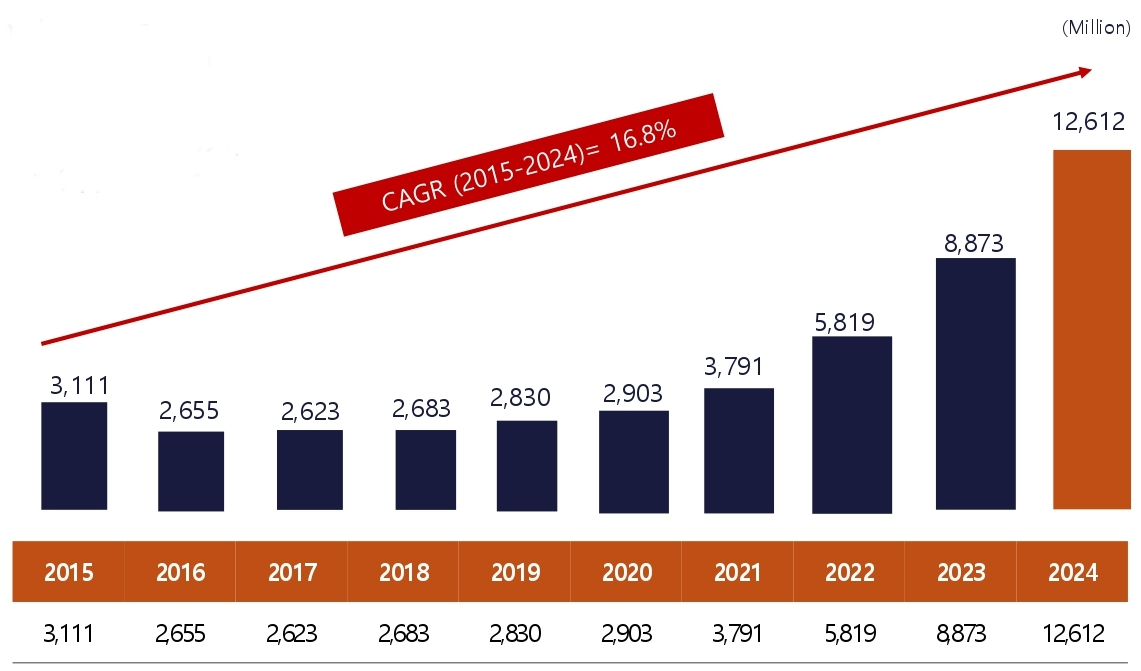
The global market size for Alzheimer's disease treatments in 2020 was approximately $3.11 billion (approximately KRW 3.5 trillion),
and is expected to grow more than fourfold by 2024, reaching approximately $12.61 billion (approximately KRW 15.2 trillion).
Data: Datamonitor Healthcare (2016)